
 English
 Español


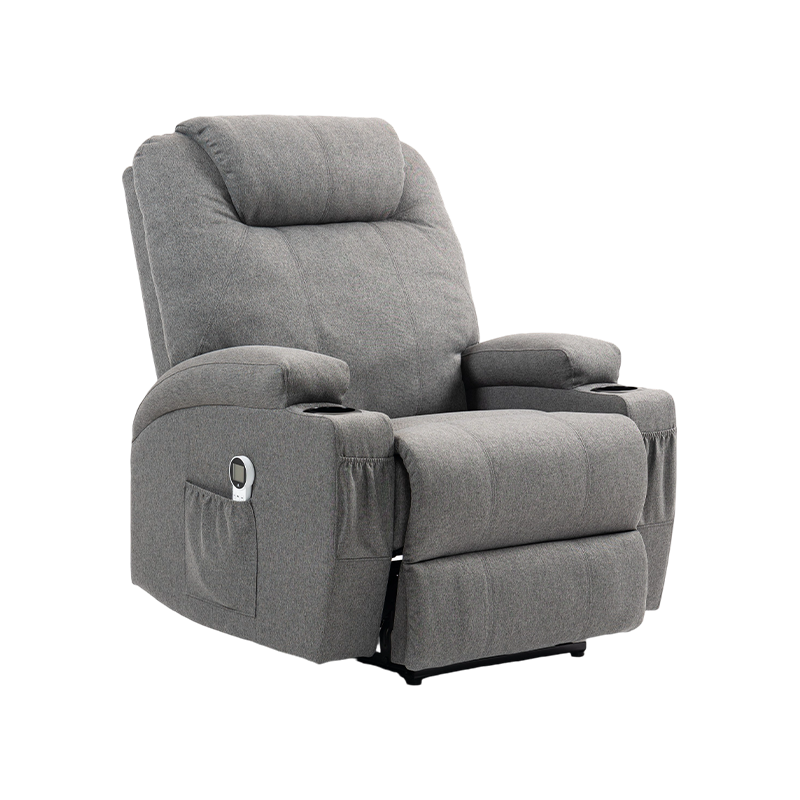
Yes — electric recliner chairs can be repaired, and the majority of faults are fixable without replacing the entire chair. The most common failures in an electric recliner chair are a faulty power supply, a damaged or disconnected wiring harness, a failed hand control, or a worn motor — all of which are replaceable components that cost between $20 and $250 depending on the part. A complete motor and actuator assembly, the most expensive individual component, typically retails at $80–$180, compared to $800–$3,000 for a new quality electric recliner. In most cases the repair-to-replacement cost ratio makes repair the clear practical choice, particularly for chairs whose frame, padding, and upholstery remain in good condition.
Can Electric Recliners Be Fixed? — A Direct Assessment
The answer in the vast majority of cases is yes, with one important qualification: the reparability depends on whether the electrical or mechanical components have failed, not the structural frame or upholstery. Electric recliner mechanisms are modular — motors, actuators, control boxes, transformers, and hand controls are all discrete components that unplug or unbolt independently. This modularity is what makes diagnosis and repair straightforward compared to, say, a built-in appliance where components are integrated into a single assembly.
Industry service data from furniture repair technicians suggests the following failure distribution across electric recliner problems reported for service:
| Fault Category | Estimated Frequency | Typical Repair Cost | DIY Feasible? |
|---|---|---|---|
| Power supply / transformer failure | 30 – 35% | $20 – $60 | Yes — plug-and-replace |
| Hand control / handset failure | 20 – 25% | $25 – $80 | Yes — plug-and-replace |
| Wiring harness damage or disconnection | 15 – 20% | $15 – $50 plus labour | Partial — connector repair yes; full harness replacement moderate |
| Motor or actuator failure | 15 – 20% | $80 – $180 | Moderate — requires accessing chair underframe |
| Control box / PCB failure | 8 – 12% | $40 – $120 | Yes — if replacement box is available for the model |
| Mechanical linkage or gearbox failure | 5 – 8% | $60 – $200 plus labour | Difficult — requires partial disassembly of mechanism |
The data makes a clear case: roughly 65–70% of electric recliner faults are in the power supply, hand control, or wiring — all of which are plug-and-replace components that any careful adult with basic tools can address. Even motor and actuator failures, which require more physical access, fall well within economical repair territory when compared to replacement cost.
How to Diagnose the Fault Before Ordering Any Parts
Correct diagnosis before purchasing replacement parts avoids the frustration of replacing a component that was not the cause of the problem. Most electric recliner faults follow a logical diagnostic sequence that can be completed in 15–30 minutes with no specialist equipment:
Step One — Check the Power Supply First
The power supply (transformer/adapter) is the single most common failure point in electric recliners, and it is also the cheapest and easiest component to check and replace. The transformer converts mains voltage (120V or 230V) to the low voltage (typically 24V or 29V DC) that the motor and control system require. When it fails, the chair produces no response whatsoever — no movement, no sound from the motor, no indicator lights on the handset.
- 01
Confirm the transformer is plugged in at both ends — the mains socket and the chair's input socket. Transformers for electric recliners use a barrel connector or proprietary plug that can work loose from the chair's input port without appearing obviously disconnected. Push the connector firmly home and test the chair before assuming the transformer has failed.
- 02
Check the mains socket is live by plugging a known-working device into the same outlet. This rules out a tripped circuit breaker or failed socket as the cause before assuming the transformer is faulty.
- 03
Measure the transformer output voltage with a multimeter set to DC voltage. The rated output is printed on the transformer label — typically 24V, 26V, or 29V DC. A reading below 80% of the rated voltage, or zero volts, confirms transformer failure. Replacement transformers matched to the output voltage and current rating (in amps) are available online for $20–$50 and resolve the fault immediately.
Step Two — Test the Hand Control
If the power supply is confirmed working but the chair still does not respond to button presses, the hand control is the next component to check. Hand controls fail in two ways: the buttons develop contact resistance that prevents a reliable signal, or the cable develops a break — usually at the point where it exits the handset body, where repeated flexing causes wire fatigue. A simple test is to unplug the hand control from the control box (the connector is typically a 5-pin or 6-pin plug on the underside of the chair) and try a substitute handset if one is available. If no substitute is available, inspect the cable carefully under good lighting for visible kinking, fraying, or sharp bends near the handset and connector ends.
Step Three — Inspect the Wiring Harness
The wiring harness connects the control box to the motor(s) and runs through the chair's moving mechanism. As the chair reclines and rises repeatedly over years, the harness flexes at the pivot points. Eventually individual wires break inside their insulation — a fault called open-circuit failure — producing intermittent or complete loss of motor function. Identify the harness route by tipping the chair gently onto its front face and examining the underside. Look for wires pinched between metal components of the mechanism, sections with visible damage, and connectors that have partially separated. Reconnecting a separated connector or repairing a pinched wire section with heat-shrink tubing and solder resolves the majority of harness faults at minimal cost.
Step Four — Test the Motor Directly
If the power supply, handset, and wiring harness are all confirmed serviceable but the chair mechanism does not move, the motor or actuator is the likely cause. Disconnect the motor connector from the control box and apply 24V DC (from the transformer output, or a bench power supply) directly to the motor terminals. A functioning motor will turn; a seized or failed motor will not. If the motor attempts to run but produces a grinding noise, the internal gearbox has failed and the motor/actuator assembly requires replacement as a unit.
Repairing an Electric Recliner Chair — Component by Component
Replacing the Power Supply Transformer
The transformer is the most straightforward repair. The replacement transformer must match three specifications from the original unit's label: output voltage (V DC), output current (A), and connector type (barrel diameter and polarity). Most electric recliners use 24V or 29V DC at 2–3 amps. Ordering a transformer with the correct voltage and a current rating equal to or higher than the original is safe — a higher-current-rated transformer does not force excess current through the motor; it simply has more reserve capacity. Allow the new transformer to operate for 30 minutes and check that it does not become hot to the touch — mild warmth is normal, but a transformer that becomes too hot to hold indicates a mismatch between its rating and the chair's power demand.
Replacing the Hand Control
Hand controls are chair-specific in terms of their connector type and button configuration, but many manufacturers use common connector standards (Okin, Dewert, Limoss, and Timotion are the four dominant actuator brands, each with their own connector family). Identifying the actuator brand — usually stamped on the motor housing visible under the chair — allows the correct replacement handset to be sourced from specialist suppliers. Replacement handsets typically cost $25–$60 and plug directly into the existing connector without any wiring modification required.
Replacing the Motor and Actuator Assembly
Motor replacement is the most physically demanding repair but remains within the capability of a methodical DIYer with basic tools. The procedure involves:
- 01
Position the chair safely before beginning. Operate the chair to its fully flat reclined position if it can still move partially, or manually push the footrest to its extended position. This relaxes tension on the actuator and makes removal significantly easier than working with the mechanism in the upright, spring-loaded position.
- 02
Tip the chair carefully onto its front face with the back of the chair resting on protective padding on the floor. This exposes the full underframe mechanism. Note the routing of all wiring before disconnecting anything — photographing the underframe from multiple angles with a phone camera before disturbing any connections avoids confusion during reassembly.
- 03
Disconnect the motor electrical connector from the control box. The actuator is attached to the frame at two pivot points — typically clevis-pin-and-bracket assemblies secured by split pins or bolts. Remove the split pins with pliers, extract the clevis pins, and the actuator slides free from its mounting brackets. Note the orientation and measurement of the actuator's stroke length before removal to verify the replacement matches.
- 04
Fit the replacement actuator in reverse order. The replacement must match the original in stroke length (the distance the actuator shaft travels between fully retracted and fully extended — typically 100–200 mm), mounting hole spacing, and connector type. Operate the chair slowly through a full cycle before returning it to its upright position to confirm the actuator engages correctly at both travel limits.
When Repair Is Not Worth Pursuing
While most electric recliner faults are repairable, three specific situations make replacement more practical than repair:
| Situation | Why Repair Is Impractical | Recommended Action |
|---|---|---|
| Discontinued model with no parts availability | Replacement motors, handsets, and control boxes are model-specific; unavailable parts make repair impossible | Contact specialist recliner repair firms who may source compatible parts; otherwise replace |
| Structural frame failure | A cracked or broken steel frame cannot be safely repaired to original load-bearing capacity in a domestic setting | Replace the chair; frame failure is a safety issue, not a cost issue |
| Multiple simultaneous component failures | If transformer, motor, and control box have all failed together (often from a power surge), cumulative parts cost approaches 40–60% of replacement cost | Compare total parts and labour cost against replacement; replacement may be more cost-effective |
| Chair under 2 years old with warranty | Attempting self-repair voids manufacturer warranty on most brands | Contact manufacturer or authorized service agent under warranty terms before any self-repair |
Sourcing Replacement Parts for Electric Recliners
The success of any electric recliner repair depends on obtaining correctly matched replacement parts. The following sources cover the majority of chairs currently in service:
- 01
The chair manufacturer directly — most major brands (La-Z-Boy, Ashley, Catnapper, Pride Mobility, Golden Technologies) operate parts departments that sell components by model number. This is the first source to check for chairs under 10 years old, as the manufacturer can confirm exact compatibility. Parts ordered directly typically carry a 90-day warranty.
- 02
Actuator brand specialists — identifying the actuator brand (Okin, Dewert, Limoss, Timotion, or Kaidi) from the motor label allows parts to be sourced from actuator specialists who stock full ranges of handsets, control boxes, and transformers for each brand. These suppliers often offer cross-brand compatibility information that resolves the common situation where an exact part number is discontinued but a compatible replacement exists.
- 03
Online marketplaces with specialist furniture parts sellers — Amazon, eBay, and specialist sites carry a broad inventory of generic and brand-specific recliner parts. When ordering, provide the transformer output voltage, actuator stroke length, connector pin count, and photographs of the existing connectors to confirm compatibility before purchasing. Most reputable parts sellers provide pre-purchase compatibility checks via email or chat.
Preventive Maintenance to Extend Electric Recliner Life
The majority of premature electric recliner failures are preventable with basic periodic maintenance that takes less than 15 minutes per year:
| Maintenance Task | Frequency | What It Prevents |
|---|---|---|
| Inspect and route the power cable and harness | Every 6 months | Pinching and abrasion damage that causes open-circuit wiring failures |
| Lubricate pivot points and slide rails with silicone spray | Annually | Increased motor load from friction, accelerating motor wear and increasing current draw |
| Check all electrical connectors for secure seating | Annually | Intermittent connection faults and arcing at loose connectors that can damage control boxes |
| Test all functions through full range of motion | Monthly | Early identification of developing mechanical binding before it causes motor overload failure |
| Keep transformer and control box ventilated — do not cover or enclose | Ongoing | Thermal overload of transformer and control PCB, which shortens component lifespan significantly |