


Article Directory
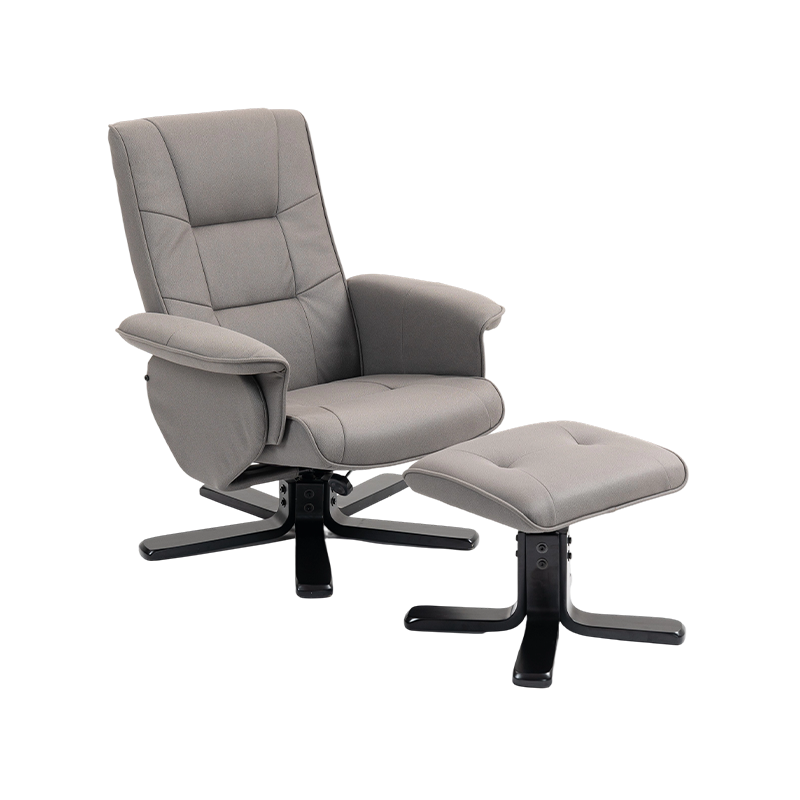
Finding the perfect recliner combines comfort, durability, and smart design choices. A PU leather upholstered push back recliner chair offers manual control, premium upholstery, and the relaxation that transforms your living room into a personal retreat. Whether you're outfitting a home theater, creating a cozy reading nook, or upgrading your master bedroom, understanding how push back recliners function, comparing different types, and recognizing quality indicators ensures you invest in furniture delivering years of comfort and reliable performance. This comprehensive guide walks through everything you need to know about selecting and maintaining push back recliner chairs.
A PU leather upholstered push back recliner chair is a motorless lounge seat featuring a manual backward-tilting mechanism, durable synthetic leather upholstery, and engineered cushioning designed for extended relaxation. Unlike electric recliners requiring electrical power, push back models use mechanical leverage—allowing users to recline by pushing backward with body weight against the chair's backrest.
The push back mechanism employs a pivot base and spring-loaded linkage system. As you lean backward in the chair, your weight compresses the backrest. When sufficient backward pressure is applied, the mechanical linkage triggers the footrest to extend while the backrest simultaneously tilts to a reclined position. Releasing backward pressure returns the chair to its upright state. This intuitive, manual operation requires no electricity, batteries, or external controls.
PU leather (polyurethane leather) is a synthetic material engineered to mimic genuine leather's appearance, texture, and durability while offering superior stain resistance and easier maintenance. PU leather upholstery wraps the recliner's frame, seat cushion, backrest, and armrests, creating a cohesive, luxurious aesthetic. The synthetic composition resists liquid absorption better than fabric, making PU leather recliners ideal for living rooms, home theaters, and family spaces where spills occur regularly.
The chair's structural foundation consists of a hardwood or metal frame reinforced at stress points where the backrest and footrest mechanisms attach. High-density foam padding beneath the PU leather upholstery provides comfort and longevity. When properly engineered, push back recliners maintain smooth mechanical operation through thousands of recline cycles, supporting occupants weighing 200–300 pounds continuously.
The recliner market offers several distinct category variations, each engineered for specific comfort preferences, space requirements, and usage patterns.
Traditional manual push back models require no electricity. Users recline by pushing backward with body weight—a simple, intuitive mechanism. Manual recliners appeal to users valuing simplicity, reliability, and absence of electronic components that could fail. They work indefinitely without electrical access and require minimal maintenance.
These simplified models feature just two positions: fully upright and one fixed recline angle (typically 135–145 degrees). Two-position recliners offer basic relaxation without the complexity of infinite angle adjustment. They suit budget-conscious consumers and compact spaces where adjustability matters less than fundamental reclining function.
Premium push back models enable continuous angle adjustment across the full reclining range. Users control exactly how far back they recline through progressive backward pressure. This flexibility accommodates different body types, relaxation preferences, and activities—watching television, reading, or napping. Multi-angle designs maximize comfort versatility.
Modern hybrid models combine manual push back initiation with subtle electrical assistance, reducing the physical effort required to recline fully. These chairs bridge manual and full-electric technologies, offering ease-of-use improvements while retaining mechanical simplicity. Hybrid systems appeal to users with limited mobility or physical strength.
Recliner chairs designed for relaxation appear across residential and commercial environments where comfort, durability, and aesthetic appeal matter equally.
Primary residence living rooms increasingly incorporate reclining chairs as anchor seating pieces. The combination of PU leather durability and manual convenience makes recliners practical family furniture accommodating extended television watching, reading, and casual social gathering. Modern design recliners coordinate aesthetically with contemporary and traditional decor styles.
Dedicated home theater installations frequently feature multiple reclining chairs arranged in tiered configurations. Manual push back recliners provide theater-quality comfort without electrical complications common in some electric systems. The quiet, mechanical operation suits immersive entertainment experiences.
Master bedrooms and guest rooms benefit from reclining chairs creating dedicated relaxation zones. A single recliner positioned near a window or lamp creates an ideal reading retreat. PU leather upholstery resists bedroom dust accumulation better than fabric upholstery, reducing allergen concerns.
Premium hotels incorporate reclining lounge chairs in suites, common areas, and waiting spaces. The combination of contemporary aesthetics, durability, and low-maintenance PU leather makes recliners attractive for hospitality applications. Commercial-grade construction ensures long service life under intensive daily use.
Healthcare facilities, rehabilitation centers, and wellness clinics feature reclining chairs for patient comfort, medical procedures, and therapeutic positioning. Ergonomic recliners with adjustable positioning support varied medical applications. Easy-clean PU leather simplifies sanitation protocols essential in healthcare settings.
Quality recliners deliver multiple performance attributes that collectively ensure comfort, durability, and long-term value in your home environment.
Premium recliners feature sculpted lumbar support contoured to natural spinal curvature. Proper lumbar support reduces back strain during extended reclined positioning and accommodates varied body types. Well-engineered lumbar zones prevent postural fatigue, enabling comfortable multi-hour relaxation periods.
High-quality mechanisms enable gliding, smooth reclining across the full angle range without jerking, catching, or mechanical resistance. Smooth operation indicates precision engineering and quality manufacturing. Consistent smoothness after thousands of recline cycles demonstrates mechanical durability.
Hardwood or reinforced metal frames provide structural integrity supporting 250–300+ pound occupants. Quality frames are kiln-dried (for wood) or precision-welded (for metal) at all stress points. Durable frames flex minimally during recline cycles and resist permanent deformation throughout the chair's service life.
Premium PU leather resists liquid absorption and permanent staining. Spilled beverages bead on the surface rather than penetrating fibers, enabling easy wipe-cleanup. Quality PU leather maintains color consistency and resists fading from sunlight exposure, preserving aesthetic appeal across years of residential or commercial use.
Seat and back cushions should feature premium foam (2.8–3.0 pounds per cubic foot density) resisting permanent compression. Quality foam maintains shape and support through thousands of recline cycles. Low-density foam flattens quickly, reducing comfort and diminishing the chair's lifespan to just a few years.
The footrest extension mechanism experiences concentrated stress during recline cycles. Quality footrest systems feature reinforced joints, quality bearings, and precise alignment. Well-engineered footrests extend and retract smoothly thousands of times without developing squeaks, looseness, or mechanical failure.
Producing quality reclining chairs requires specialized equipment, skilled labor, and strict quality control ensuring durability, comfort, and aesthetic excellence.
Hardwood lumber is kiln-dried to controlled moisture content, then cut and shaped into frame components. Wood pieces are precisely jointed at corners using mortise-and-tenon or dowel joinery, creating strong structural connections. Quality manufacturers use premium hardwoods (oak, beech, or mixed hardwoods) rather than softwoods prone to warping. Metal reinforcement brackets are installed at stress points where the backrest and footrest mechanisms attach.
Precision-engineered reclining mechanisms featuring springs, levers, and linkages are installed and tested. Each mechanism is adjusted to ensure smooth operation across the full reclining range. Quality control includes testing that each chair reclines and returns smoothly through 100+ manual cycles before upholstery is applied.
High-density polyurethane foam is cut or molded to exact seat and back cushion shapes. Layers are bonded together creating comfortable padding that resists permanent compression. Premium recliners feature multiple foam densities—firmer support layers underlying softer comfort layers. Cushions are wrapped in batting material providing smooth, wrinkle-free surfaces.
Premium PU leather is selected and inspected for color consistency and surface quality. Fabric is carefully stretched across cushioned frames and secured using industrial stapling at reinforced points on frame undersides. Professional upholsterers ensure smooth, wrinkle-free surfaces without puckers or uneven tension. Seams are precisely stitched for refined appearance and durability.
Completed recliners undergo comprehensive testing: recline mechanism smoothness evaluation through 50+ test cycles, load-bearing verification (250–300+ pounds), structural stress testing, and upholstery quality inspection. Professional inspectors verify dimensional accuracy, hardware tightness, and overall assembly quality. Chairs failing quality standards are repaired or disassembled for component reuse.
Understanding differences between manual and electric recliners enables informed selection matching your specific needs, lifestyle, and budget.
| Feature | Manual Push Back | Electric Recliner |
| Operation | Body weight and manual pushing | Electric motor with remote control |
| Cost | Lower purchase price | 20–40% premium vs. manual |
| Maintenance | Minimal mechanical care | Electrical component servicing |
| Noise Level | Silent operation | Audible motor noise |
| Reliability | Decades without repair | Motor failure possible |
| Physical Effort | Moderate push required | Minimal effort—press button |
| Power Requirement | None—mechanical only | Electrical outlet access |
| Durability | Mechanical simplicity = longevity | Electronics subject to failure |
Understanding realistic limitations enables appropriate expectations and proper maintenance ensuring long-term satisfaction with your recliner investment.
Over extended years (8–10+), PU leather can develop surface cracks or peel in high-stress areas—armrests, seat edges, and backrest creases. This degradation occurs faster with direct sunlight exposure and fluctuating humidity. Quality protective treatments slow this process significantly, but eventual surface wear remains likely with very long-term use. Genuine leather recliners resist this but cost substantially more.
PU leather retains body heat more than fabric, potentially causing discomfort in warm climates or during extended summer use. The synthetic material lacks natural fiber breathability, potentially causing heat buildup against skin. In temperate climates, this proves minimal concern; in hot environments, fabric upholstery may provide superior comfort.
After 5,000–10,000 recline cycles (potentially 5–10 years of regular use), spring-based mechanisms can develop resistance or stick. Footrest joints may develop squeaks or looseness. While manual mechanisms rarely fail completely, gradual degradation in smoothness is inevitable. Repairs typically require professional service with associated labor costs.
Most push back recliners safely support 250–300 pounds. Heavy occupants exceeding these limits experience accelerated mechanism wear, reduced mechanical smoothness, and potential structural damage. Very large individuals may require specialty heavy-duty recliners engineered for 350+ pound capacity at premium pricing.
Unlike electric recliners enabling infinite angle positions and programmable settings, manual push back models offer single-lever control. Users cannot fine-tune precise reclining angles or memorize preferred positions. This simplicity appeals to some but frustrates users desiring sophisticated control options.
Modern furniture design evolution is producing reclining chairs addressing sustainability concerns, technological integration, and sophisticated comfort optimization.
Manufacturers increasingly adopt sustainable alternatives to traditional PU leather—lab-grown leather, recycled synthetic materials, and plant-based upholstery matching premium aesthetics. Sustainable materials reduce environmental impact while maintaining durability and stain resistance. Future recliners will balance comfort luxury with ecological responsibility.
Advanced manufacturing enables scientifically optimized reclining geometries reducing back strain and postural fatigue. Future designs incorporate biomechanical research—precise lumbar support profiles, seat angle optimization, and customizable cushioning responding to occupant body type. Intelligence-driven comfort enhances relaxation quality.
Contemporary living spaces demand flexible, multi-purpose furniture. Future recliners may feature modular construction enabling repositioning, component upgrades, or functional adaptation. Convertible designs addressing space constraints appeal to apartment dwellers and those valuing design flexibility.
Modern design trends favor clean lines, neutral colors, and furniture serving dual aesthetic and functional purposes. Future recliners will increasingly coordinate with contemporary interior design—appearing equally at home in minimalist lofts as traditional living rooms. Industrial-grade materials and sophisticated simplicity replace ornate, overstuffed vintage recliner aesthetics.
Emerging possibilities include recliners with integrated wellness features—posture sensors, smart positioning, voice-controlled adjustments, or health monitoring capabilities. Smart recliners may synchronize with home automation systems or track comfort preferences. Technology integration appeals to tech-forward consumers seeking sophisticated home furnishings.
A push back recliner chair is a motorless lounge seat that reclines when you push backward with your body weight. As you lean back against the backrest, mechanical leverage triggers the footrest to extend while the backrest tilts to a reclined position. Releasing backward pressure returns the chair to upright. Push back recliners require no electricity, offering simple, reliable relaxation through mechanical operation.
Quality PU leather recliners provide exceptional comfort through ergonomic backrest design, high-density foam cushioning, and smooth reclining mechanics. Premium suede-like PU leather provides tactile comfort and warmth. Comfort ultimately depends on chair construction quality and proper fit to your body type. Well-engineered recliners accommodate extended relaxation periods (2+ hours) without postural fatigue or back pain.
Well-designed recliners with proper lumbar support can reduce back pain by supporting natural spinal curvature and distributing body weight evenly. Reclined positioning reduces load on intervertebral discs compared to upright sitting. However, recliners are not medical devices. Individuals experiencing chronic back pain should consult healthcare providers before relying on furniture as pain management. Proper ergonomic design significantly improves comfort for most users.
Quality push back recliners typically provide 7–15 years of reliable service in residential use, with some reaching 20+ years with proper maintenance. Lifespan depends on construction quality, material durability, usage frequency, and maintenance consistency. PU leather upholstery typically shows aging (fading, minor cracking) after 8–10 years, though mechanical function often remains reliable much longer. Commercial-grade recliners in hospitality environments often exceed 10 years of intensive daily use.
Manual push back recliners suit budget-conscious shoppers, reliability-focused users, and those valuing mechanical simplicity. Electric recliners appeal to users wanting convenience, ease of operation, or those with limited mobility. Manual models cost 20–40% less, operate silently, and rarely require repairs. Electric models offer programmable positioning and one-touch convenience but cost more and depend on electrical access. The choice depends on personal priorities: simplicity vs. convenience, lower cost vs. ease-of-use.
Yes, most recliner chair components are repairable. Mechanical issues—sluggish footrest, resistance in reclining—typically involve tightening fasteners or lubricating joints. Professional upholsterers can repair minor PU leather tears or seam separation. Major repairs might include mechanism component replacement or significant upholstery restoration. Repair costs vary widely; minor adjustments cost minimal amounts, while major overhauls approach or exceed purchase price of replacement chairs.

+86-13819261237

+86-572-5082270

sales@ajhqfurniture.com

Factory Building 2, No. 11, Sangang Road, Sunshine District 2, Anji Economic Development Zone, Dipu Street, Anji, Huzhou, Zhejiang, China
Copyright © 2022 Anji Hongqiang Furniture Co., Ltd.Custom Euro Style Convertible Single Functional Recliners Manufacturers



 English
 Español