


Article Directory
Anji Hongqiang Furniture Co., Ltd., established in 2012 in the industrial cluster of Anji County, Zhejiang Province, operates as a specialized manufacturer with 12 years of export expertise in high-performance seating solutions. Utilizing a 10,000-square-meter facility with advanced production lines, the company maintains strict management systems to deliver power recliners, lift chairs, and zero-gravity systems to over 500 countries. Strategically located near Shanghai and Ningbo ports, we provide technical customization for textile density, structural frames, and foam resilience. In the current contract and residential furniture market, the modern recliner chair with ottoman represents a significant shift toward modular, high-durability seating that optimizes both ergonomic support and long-term maintenance costs.
The primary engineering advantage of a standalone reclining unit over a multi-seat integrated sofa lies in its mechanical independence. When evaluating how modern recliner chairs with ottomans save space, the focus is often on the footprint, but the true benefit is the reduction in complex linkage systems. Integrated sofas utilize heavy-duty metal gauged frames that span 2000mm or more, making them prone to structural deflection over time. Conversely, the structural integrity of recliner chairs in a separate configuration allows for a concentrated center of gravity. At Anji Hongqiang, we utilize reinforced steel alloy for the swivel and tilt mechanisms, ensuring that the durability of modern recliner chairs exceeds BIFMA standards for load-bearing cycles, which is often a point of failure in the interconnected frames of reclining sofas.
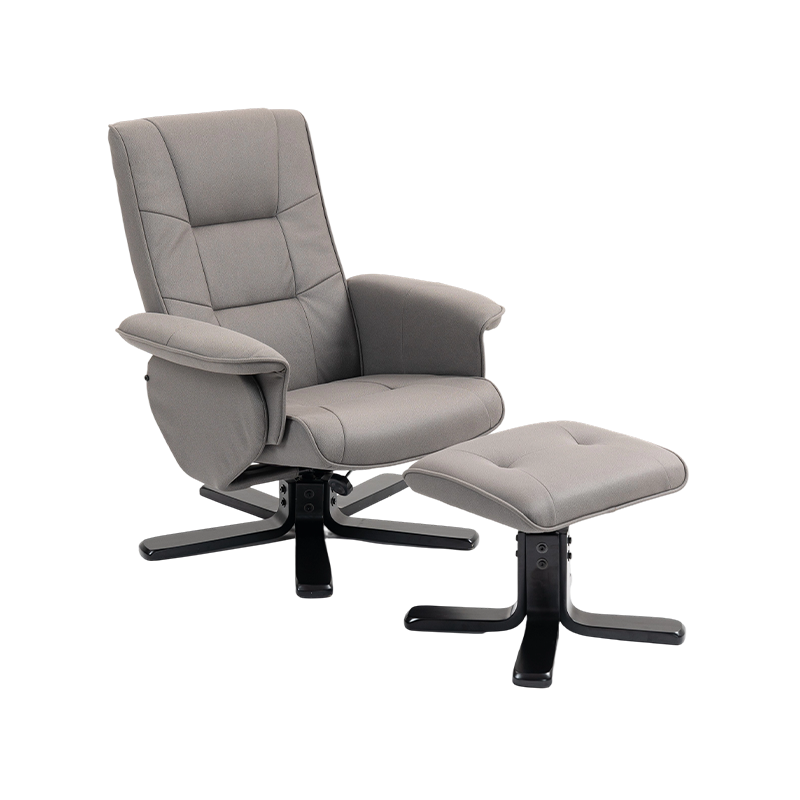
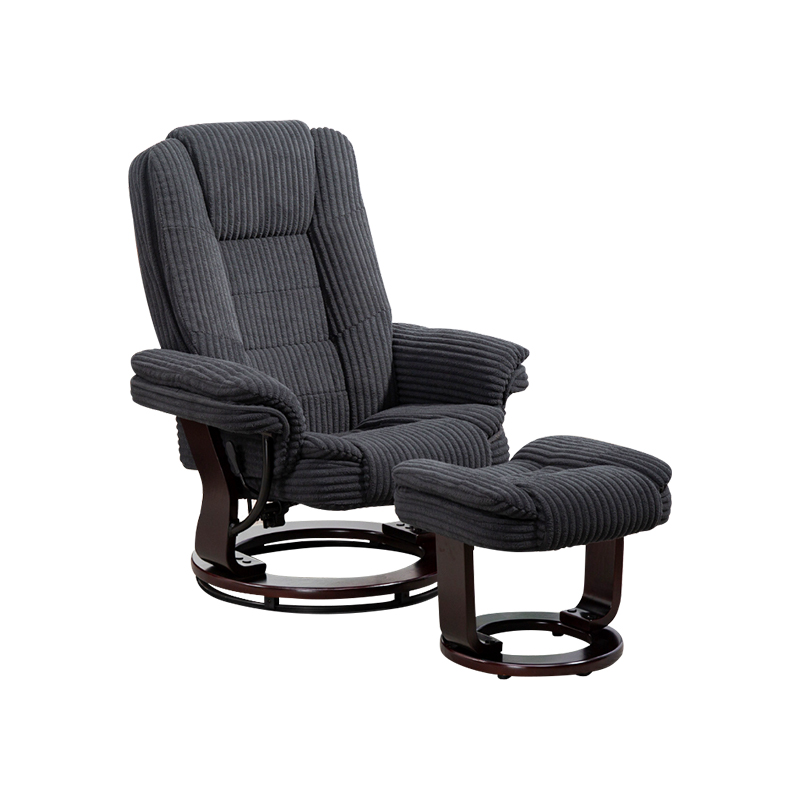
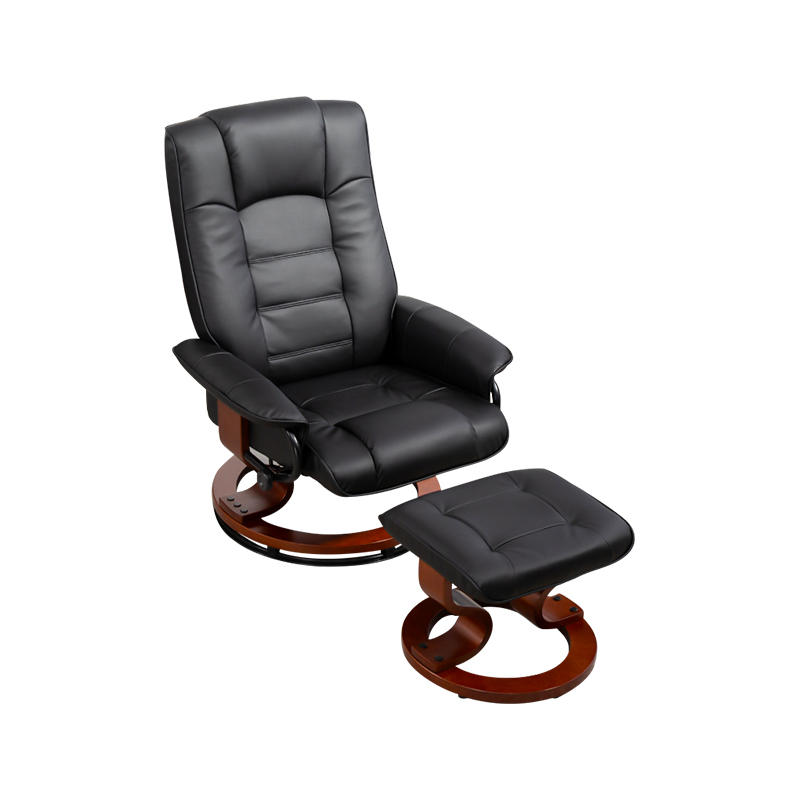
A modern recliner chair with ottoman allows for independent adjustment of the lower extremity support, which is critical for vascular health. Unlike built-in footrests that are tethered to the chair's backrest angle, an independent ottoman allows for ergonomic benefits of separate ottomans by enabling the user to position the stool based on their specific tibia length. This postural support in reclining chairs is enhanced by high-resilience (HR) polyurethane foam with a density of 30-35 kg/m3. When analyzing why separate ottomans are better for legs, the mechanical freedom to adjust the distance between the seat and the foot support prevents "heel overhang," a common ergonomic deficiency in integrated reclining sofas that leads to Achilles tendon strain.
From a facility management or long-term residential perspective, the maintenance of recliner chairs vs reclining sofas is a decisive factor in cost-effectiveness. In a built-in sofa, a failure in a single motor or a tear in the upholstery often requires the transport of the entire 100kg+ unit for repair. A standalone modern recliner chair with ottoman allows for isolated component servicing. Furthermore, the recliner chair with ottoman cost-efficiency is realized when considering fabric wear; the ottoman, which experiences higher abrasion from footwear, can be reupholstered or replaced independently of the main chair. This modularity ensures that the average lifespan of a recliner chair is significantly longer than that of a complex, multi-mechanism sofa.
Material selection plays a vital role in the user's thermal comfort. Integrated sofas often utilize large continuous swaths of bonded leather or synthetic microfibers that can trap heat. Our customized fabrics for recliner chairs include breathable linens and high-rub-count leathers that facilitate air exchange. For technical buyers, the breathability of recliner chair fabrics is measured by moisture vapor transmission rates (MVTR), ensuring the seat remains comfortable during extended periods of use. The following table provides a technical comparison of the mechanical and operational differences between these two seating architectures.
| Technical Metric | Built-in Reclining Sofa | Modern Recliner with Ottoman |
| Frame Material | Multi-jointed Steel/Wood | Reinforced Steel Pivot/Base |
| Mechanism Complexity | High (Linked Sync) | Low (Independent) |
| Weight per Unit (kg) | 85 - 150 | 25 - 45 |
| Repair Accessibility | Difficult (Requires Disassembly) | High (Modular Components) |
| Max Load per Seat (kg) | 110 - 130 | 150+ (Concentrated Load) |
The versatility of modern recliners in room design is a key driver for interior designers focusing on high-density living or hospitality projects. While a reclining sofa dictates a fixed wall clearance (often 100-200mm), a swivel recliner chair with ottoman can be placed in corners or at angles to maximize natural light or sightlines to digital displays. This flexibility is a core reason why recliners are preferred over sofas in modern layouts. By utilizing adjustable tension knobs for reclining chairs, users can calibrate the resistance to their specific body weight, a level of precision rarely achieved in the standardized tension springs found in mass-produced reclining couches.
Q1: What is the benefit of a "Wall-Hugger" mechanism in standalone recliners?
A1: A wall-hugger mechanism uses a forward-sliding track that allows the chair to fully recline with as little as 50mm of clearance, optimizing floor space without sacrificing tilt angle.
Q2: How does the "Zero Gravity" position affect spinal pressure?
A2: By elevating the legs above the heart level at approximately a 128-degree angle, the chair minimizes the force of gravity on the vertebrae, reducing intervertebral disc pressure and improving circulation.
Q3: What is the tensile strength of the stitching used in Hongqiang recliners?
A3: We use high-tensile bonded nylon thread (Size 69) with a double-stitch technique to ensure seams can withstand over 200 Newtons of force during heavy use.
Q4: Can the ottoman be used as additional guest seating?
A4: Yes, our ottomans are engineered with the same reinforced internal frames and high-density foam as the seat, supporting static loads up to 100kg.
Q5: How do you prevent floor damage from the metal swivel base?
A5: Every base is equipped with non-marring PA6 (Nylon 6) floor glides or a rubberized perimeter ring to prevent scratching on hardwood or laminate surfaces.

+86-13819261237

+86-572-5082270

sales@ajhqfurniture.com

Factory Building 2, No. 11, Sangang Road, Sunshine District 2, Anji Economic Development Zone, Dipu Street, Anji, Huzhou, Zhejiang, China
Copyright © 2022 Anji Hongqiang Furniture Co., Ltd.Custom Euro Style Convertible Single Functional Recliners Manufacturers



 English
 Español