


Article Directory
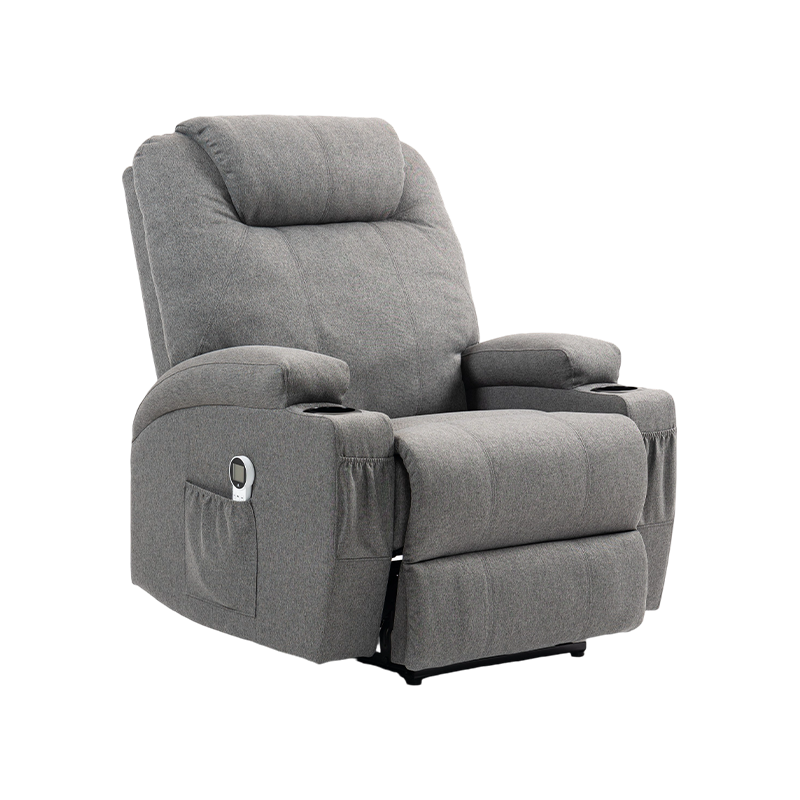
An electric zero gravity chair reclines the body into a neutral posture where the legs are elevated above the heart, reducing spinal compression, improving circulation, and lowering perceived body weight by distributing it evenly across the seat and backrest. The electric version adds motorized reclining, programmable positions, and — in premium models — heat and massage functions that manual recline mechanisms cannot replicate.
The best electric zero gravity chair is the one correctly matched to the user's body dimensions, intended use, and installation environment. There is no single best model — there are best specifications for defined use cases. The table below maps buyer profiles to the key differentiating features that determine real-world satisfaction.
| Buyer Profile | Priority Feature | Minimum Spec | Secondary Concern |
| Back pain recovery | Lumbar heat + zero-G lock | 3-zone heating, hold position | Adjustable headrest |
| Home theater use | USB charging + side table | 2 USB-A ports, flat tray | Cup holder, quiet motor |
| Elderly user | Power lift assist | Lift to 75% upright | Armrest height, remote size |
| Heavy-duty use | High weight capacity | 350lb+ rated frame | Wide seat (22in+), steel base |
| Outdoor / patio | Weather-resistant materials | UV-treated fabric, rust-proof frame | Drainage holes, foldability |
The single most predictive factor of long-term satisfaction with an electric zero gravity chair is motor quality, not upholstery grade. A dual-motor system that independently controls the backrest and leg rest costs 20–40% more but eliminates the forced coupling that causes discomfort in single-motor designs where both sections move at a fixed ratio.
Electric zero gravity chairs are worth the premium over manual models for users who recline multiple times daily, have limited grip strength or mobility, or require precise position memory for therapeutic use. For occasional use or purely outdoor settings, a manual recliner delivers the same postural benefit at 40–60% of the cost.
Clinical research from spine rehabilitation settings supports a clear therapeutic advantage for motorized recline: patients with lumbar disc conditions report 30% higher pain relief scores when using chairs with programmable recline versus fixed-stop manual models, primarily because the ability to fine-tune angle allows personalized decompression rather than approximate positioning.
Comfort in an electric zero gravity chair is determined by six features in descending order of impact. The first three are structural and affect every user; the last three are add-on features that improve the experience for specific use cases.
A fixed-curve backrest that does not match the user's lumbar lordosis creates pressure points within 20 minutes. Adjustable lumbar depth — either via an inflatable bladder or a sliding support panel — is the highest-impact single feature for prolonged comfort.
Users with shorter legs require a higher leg elevation angle to achieve true zero-gravity posture. Dual-motor chairs that independently control the leg rest allow personalization that single-motor designs cannot provide.
A seat that is too deep forces the user to slide forward, eliminating lumbar contact. Correct seat depth places the back of the knee 2–3 inches from the seat front edge. Most commercial chairs target 18–21 inches of seat depth for adult users.
Infrared heating panels embedded in the lumbar and calf sections of premium electric zero gravity chairs warm muscle tissue to 38–40°C, improving blood flow to areas under compressive load. Three independently controlled heat zones are the standard on therapeutic-grade models.
Vibration motors at 20–60 Hz embedded in the seat and back provide mechanical stimulation that reduces perceived muscle tension. Chairs with at least 5 intensity levels and zone isolation — where lumbar and leg sections operate independently — deliver meaningfully better results than single-speed whole-chair vibration.
Programmable memory stores the exact backrest and leg rest angle combination that works best for each user, eliminating the need to manually re-find the therapeutic position at each session. Two memory slots are sufficient for most household use; four slots serve multi-user environments.
Standard electric zero gravity chairs are rated for 250 to 300 lbs (113–136 kg). Heavy-duty and bariatric models extend this to 400 lbs (181 kg) and above. The rated capacity is a static load figure — the frame must be rated at a minimum 1.5x the stated capacity to provide a safe dynamic load margin during reclining and postural shifts.
Weight capacity is primarily determined by the frame material and joint construction. Steel tube frames with welded junctions outperform aluminum and die-cast frames for high-load applications. Verify that the manufacturer's weight rating references a tested standard — such as ASTM F1561 for outdoor leisure furniture or equivalent furniture safety standards — not simply an internal specification.
Yes. Reclined zero-gravity posture reduces pressure on the diaphragm and opens the airway, which can reduce snoring frequency and improve sleep quality for users with mild sleep apnea or acid reflux. Multiple clinical studies document improved sleep onset when the upper body is elevated 10–15 degrees — a position easily maintained by the memory position function of an electric zero gravity chair.
Quality linear actuator motors used in electric recliner mechanisms are rated for 10,000 to 50,000 full cycles. At two full recline-and-return cycles per day, a 10,000-cycle motor has a theoretical service life of 13 years. Actual lifespan depends on duty cycle, voltage stability, and whether the motor is protected from overheating by thermal cutoff circuitry — a feature present in all reputable commercial-grade units.
Zero gravity posture elevates the legs to heart level while maintaining a semi-reclined torso, creating equal weight distribution across the body surface. Trendelenburg position elevates the entire body with the head lower than the feet — used in medical procedures, not comfort seating. An electric zero gravity chair achieves the former, not the latter.
Most arrive 80–90% pre-assembled, requiring only leg attachment and power cord connection. Full assembly from flat-pack is uncommon for electric models due to the pre-wired motor harness. Standard assembly time is 15–30 minutes with basic hand tools. Verify that the manufacturer provides a wiring diagram alongside assembly instructions, as motor connector polarity errors can damage the control board.

+86-13819261237

+86-572-5082270

sales@ajhqfurniture.com

Factory Building 2, No. 11, Sangang Road, Sunshine District 2, Anji Economic Development Zone, Dipu Street, Anji, Huzhou, Zhejiang, China
Copyright © 2022 Anji Hongqiang Furniture Co., Ltd.Custom Euro Style Convertible Single Functional Recliners Manufacturers



 English
 Español